|
Charlotte Christensen
The Spirit of Place
They have a term for it in Latin: genius loci. The spirit of place, suggesting that a ‘place’ can be more than a geographical entity, that it may contain and express something essential about a person. Or a divine being. This is the idea behind the attempt to turn someone's domicile, in most cases an artist's, into a museum or place of remembrance. These places have their appeal for readers, as in we've seen in the case of Selma Lagerlöf's farm at Mårbacka in Sweden, or for art lovers, who visit the house of Michael and Anna Ancher in the town of Skagen in the northernmost point of Denmark.
The abovementioned ‘spirit of place’ may manifest itself for instance through the light enveloping the home in question, the tranquillity that speaks to its distance from the madding crowd, or the way a house dominates its'surroundings, as happens in Weimar where Goethe resided. If the person being commemorated is a visual artist, the ‘spirit’ of a place may have something to do with the wide open spaces around it, its closeness to the sea, or the explosions of Northern Lights that on occasion light up a house. These are all natural phenomena that are bound to find their way into the work of a painter or a sculptor.
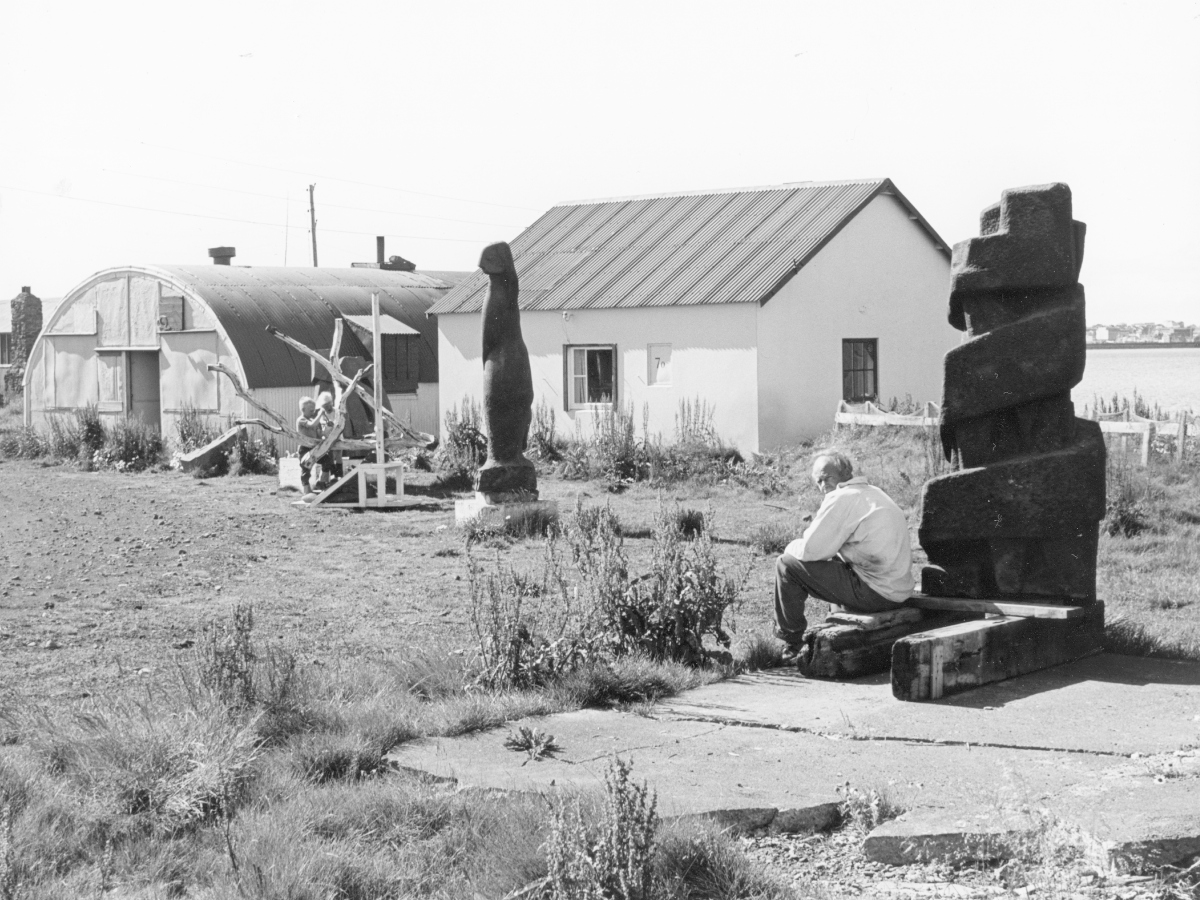 Laugarnestangi in Reykjavík 1959 |
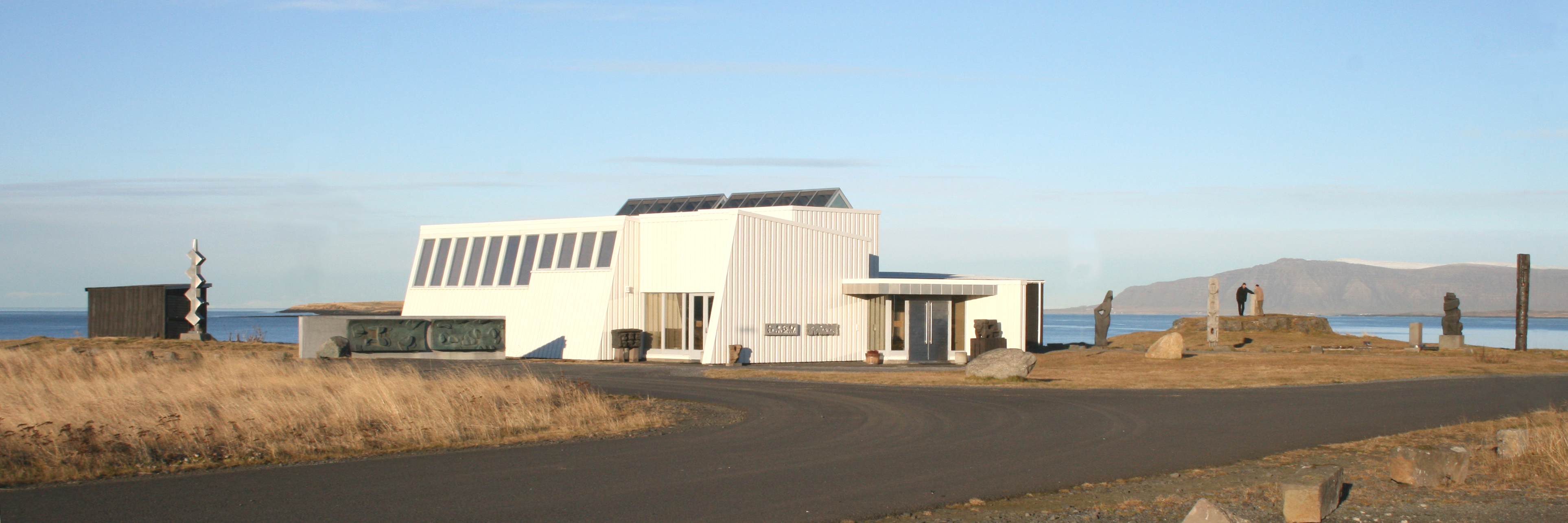
In Reykjavík there are many buildings where writers or visual artists have lived and taken comfort and inspiration from their surroundings. Undoubtedly the prettiest and most commanding of them is the Sigurjón Ólafsson Museum, right in the middle of the Laugarnes culture landscape, more precisely at Laugarnestangi 70. This is where the sculptor Ólafsson settled down when he came back in 1945, after many years of study and work in Denmark. It must have been a rude shock for him, coming from Copenhagen, a modern European metropolis, where he worked as an assistant to arch-conservative sculptor, Einar Utzon-Frank (1888−1955), at the same time that he exhibited his work with a multitalented iconoclast like Asger Jorn. With its modest skyscrapers casting their shadows over the cityscape, present day Reykjavík is unrecognizable from the unprepossessing coastal village that Ólafsson came back to in 1945. But this backwater was far from a culturally backward place and its artistic community was both large and spirited.
In time Sigurjón Ólafsson's rather primitive dwelling and adjoining studio were repaired and enlarged, and after the artist's death in 1982 his widow, Birgitta Spur, was able to find funds that enabled her to turn their erstwhile home into a museum. This institution now houses his sculpture and an extensive archive that pertains to it, which is also accessible online. Fortunately the spirit of the place has survived the changes, so that every visit to the Sigurjón Ólafsson Museum turns into a revelation, where sculpture, nature and architecture create a unique symbiosis. What a visiting Dane finds particularly Icelandic is how the ever changing face of the nature surrounding the place manages to affect the mood of the everyday visitor.
The museum's chief exhibition for 2026 is entitled ‘Face to Face: Portraits by Sigurjón Ólafsson.’ Through some 27 works, you get a remarkable insight into the sculptor's portrait practice. It is a practice that is in many ways the connecting theme of the sculptor's art, motivated by his enduring interest in his fellow human beings as well as economic necessity, the need to earn money that would buy him time to work on his more abstract − and inaccessible - sculptures.
The exhibition demonstrates how the artist's response to the human form varies over time. Although his portraits are by necessity reliant on naturalistic elements, for most of his life Sigurjón Ólafsson produced naturalistic and abstact pieces virtually concurrently, though naturalism is obviously the predominant feature of his portraits. Nevertheless, as the exhibition demonstrates, his approach to portrait sculpture differs considerably, depending on his artistic priorities at a given time and the materials at hand. He portrays people of all ages and classes and many of his finest portraits are not commissions. There are many portraits of working class figures, whose features bear the marks of a lifetime of toil and endurance, and others such as ‘The Hunchback’, that bear witness to a life of unrelenting pain and suffering.
The modest catalogue for the exhibition contains an informative interview from 1980 which Ólafsson gave to his assistant at the time, sculptor Erlingur Jónsson. In it he talks about the European sculptors he was interested in at the onset of his career, his choice of materials and the process of working from the head of a living person. Any artist, be it a painter or a sculptor, entrusted with the task of bringing forth the essence of another human being, has to be able to make his sitter play along. Should the sitter succumb to boredom or exhaustion during the long portrait sessions, these negative feelings will be transferred to his portrait, causing it to die a slow death.
 The Artist's Mother
Guðrún Gísladóttir |
The exhibition is not presented in strict chronological order. Older portraits are interspersed with more recent ones, and plaster pieces cozy up to stone carvings or sculptures out of welded metal. In the museum's largest gallery, three female portraits bring sparkle to a long row of very serious middle-aged men, where only the powerful plaster bust of Jón Thordarson (1956), with his pear-shaped chops, jug ears and crafty expression manages to make us smile.
 Hanne Schultz |
The three female busts have very different expressive features. Ólafsson's portrait of his mother, executed while he was still a student in Copenhagen, was admired by many people. In 1939 he was awarded the Eckersberg-medal for it, which at the time was the greatest honor bestowed on an artist in Denmark. Apparently the portrait was produced on a single day in 1938, while Ólafsson was on a visit to his native Iceland and had asked his mother to put on the national costume for him. During those early years in Copenhagen he also produced the charming portrait of Hanne Schultz, daughter of the art historian and Thorvaldsen expert Sigurd Schultz. But it is definitely not Thorvaldsen who comes to mind when we look at this delightful terracotta bust, rather the dreamy full-length female figures, korai, which adorn the archaic temple of Acropolis in Athens.
 Svava Ágústsdóttir |
The third female head is a bronze of an elegant and wordly woman by the name of Svava Ágústsdóttir, who is presented to us in the guise of an Egyptian Queen. Thus Ólafsson's portraits of females are a variable lot, stylistically as well as psychologically. In addition the room also features a brutally simplified portrait of a young girl in a modernistic style (‘ A Girl’, ex catalogue).
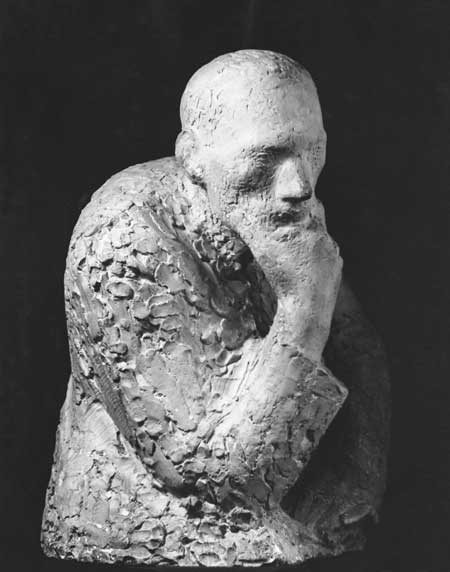 Hunchback |
The contrast between Ólafsson's portraits of well connected, solemn-looking citizens and his depictions of anonymous working men, mostly seated, testifies to the political attitude that was always part and parcel of his world view. His empathy for his fellow man is at its'most arresting in the abovementioned ‘Hunchback’, where the subject's bulky clothes are built up through a repeated layering of thick clay, which then serves to bring out the fragility of his smooth cranium and bare hands. Thus a suffering individual comes before us, demanding a modicum of understanding and respect, which the sculptor, for one, is certainly able to offer him. But in the end it wasn't quite enough for the supplicant, who ended up taking his own life.
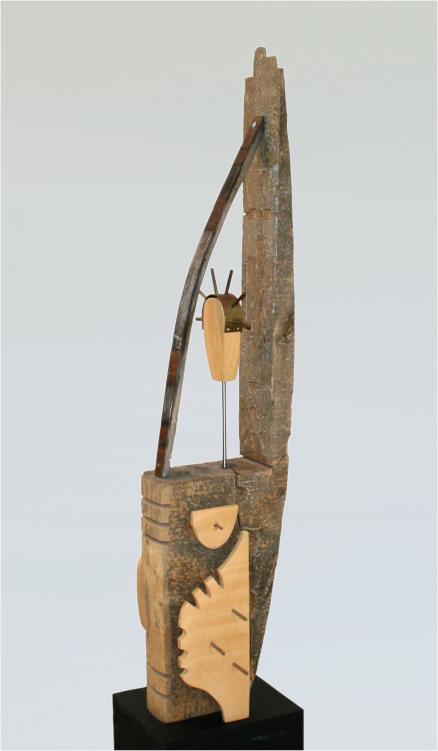 Forsetinn |
The exhibition's expansiveness, the way it highlights the whole range of the sculptor's activities is especially impressive. It is particularly in evidence in the small gallery on the second floor of the museum. While I write this two ravens (Odin's ?) have settled outside the window, croaking lustily − this sort of thing tends to happen in Laugarnes. As you come up the stairs and step inside, you come across a sculptural joke. Its called ‘The President’, a piece in mixed media, mostly wood and metal, which is a nod to Vigdís Finnbogadóttir dating from her time as the nation's president. Her election was a event that had global repercussions; here Ólafsson comments on it with a sly reference to the Nordic god of poetry, Odin.
Thereafter one goes back in time, to 1931, when Ólafsson is repeatedly outdoing himself with sheer exuberance. One of his subject is an elderly gentleman named
Jørgen M. Børresen
who is seen turning his head to the right. In the process both his moustache and his bow tie seem to billow like restless waves. The sculptor says somewhere that „you have to be in good form when you are working on a portrait“. He is certainly in fine fettle in an another early female portrait, the one of future actress
Sigrún Magnúsdóttir,
where her abundant hair seems to undulate like the decorative features on an art nouveau piece, while the charming smile doesn't quite hide a row of teeth.
But it is in the portraits that Ólafsson does of his teacher-colleagues in Copenhagen.
Utzon-Frank and
Johannes Bjerg,
that he demonstrates the mastery of his trade. Remarkably, but perhaps aptly, the latter comes before us looking like an arrogant 15th century Italian warlord.
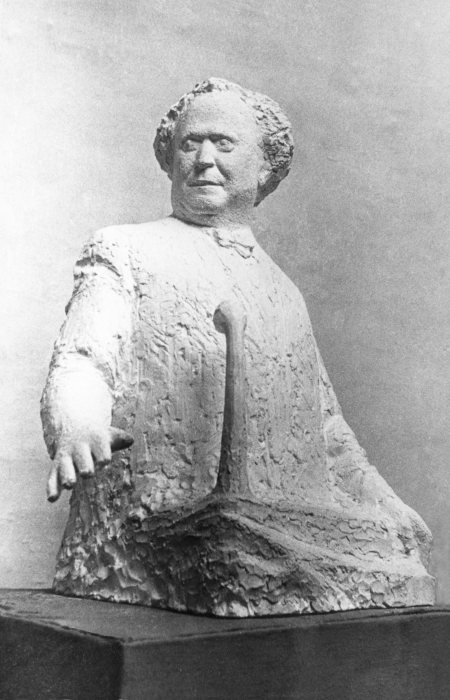 Martin Andersen Nexø |
It is regrettable that we only have a photograph of the bold and provocative portrait study of Communist writer Martin Andersen Nexø that Ólafsson did, since the original is lost, presumed destroyed. It is a really dramatic presentation of the politically engaged Dane, which incidentally harks back to another outstanding and famous sculpture by painter and sculptor J.F. Willumsen of the rabble-rouser and writer Viggo Hørup. This sculpture can be seen in the King's Garden in Copenhagen, quite close to Nyhavn, where Ólafsson used to live.
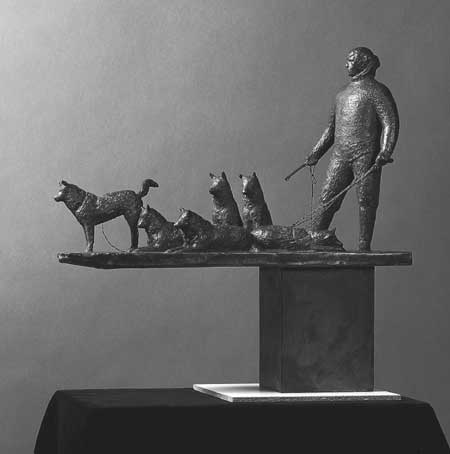 Knud Rasmussen |
Ólafsson only did one set of public sculptures during his time in Denmark, the granite sculptures in front of the town hall of Vejle,
( i and
ii )
though he would no doubt have produced an excellent memorial to the Danish arctic explorer, Knud Rasmussen. The exhibition in Laugarnes includes his contribution to the 1957 competition for just such a memorial, a view of a unassuming yet heroic figure, who is shown with his life-saving companions, his sled dogs. The first prize − and the commission − should have gone to Ólafsson!
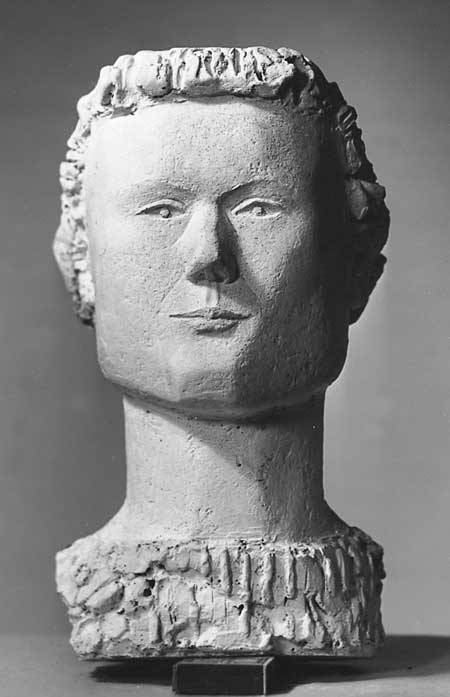 Birgitta Spur |
Not all the visitors to the exhibition would recognize bust no. 8: Birgitta Spur. This unusual bronze head, with its artful patina, installed in a corner of upper floor gallery, is definitely worth a close look. Not just because there is something of Pablo Picasso's or Miró's abstract sculptures about it, but because the museum housing our portrait exhibition would not exist, were it not for Birgitta Spur's lifelong effort to preserve Sigurjón Ólafsson's sculptural legacy. She married the sculptor in 1956 and bore him four children. In 1963 a new studio was built in the place of the one he had occupied since his return to Iceland. But in 1982, when he died, this studio was not in a fit state to provide a permanent shelter to the large collection of sculptures and sundry other work found in Laugarnes. Through unceasing effort, inspired by her love of place as well as the works of her husband, she was able to come up with the funds needed to set up a private museum, which was opened on 1. December 1984. The architect was Ögmundur Skarphéðinsson. Since then, Birgitta Spur has tirelessly worked to ensure that the museum remains a fitting backdrop to Sigurjón Ólafsson's art, and that his work is regarded as a significant aspect of Icelandic culture. At the same time she has produced exhibitions and publications that have demonstrated the importance of the artist's work in an international context.
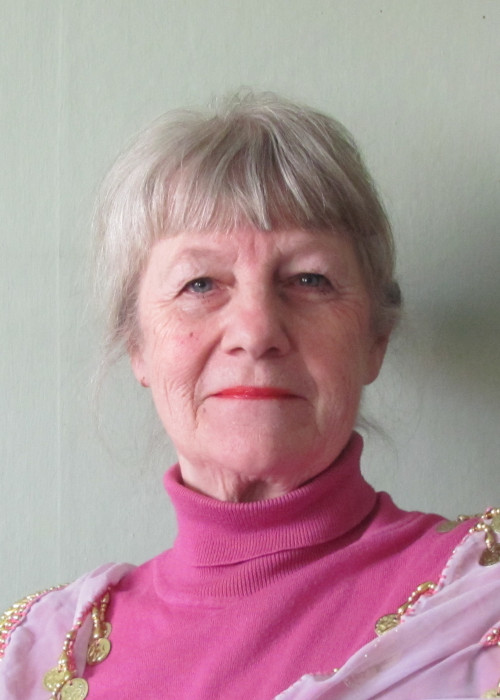 Charlotte Christensen art historian
Translation from Danish: Aðalsteinn Ingólfsson
Icelandic version of this article was published in Morgunblaðið 10.10.2026
|
|
|